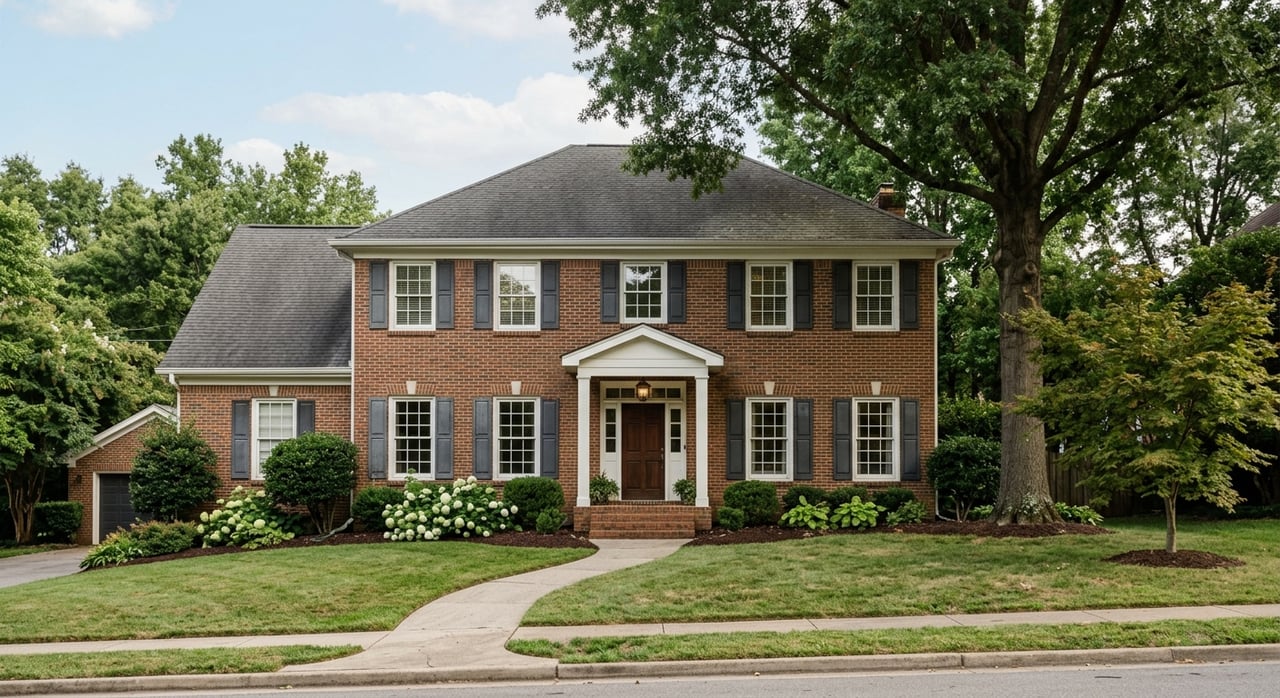
Trying to decide between a brand-new home in Carmel and an older home in Indianapolis? You are not alone. Many buyers in Central Indiana are weighing the same question, especially when you want the right mix of budget, style, convenience, and long-term comfort. The good news is that both options can be smart, depending on what matters most to you. Let’s break down the tradeoffs so you can make a more confident move.
Carmel and Indianapolis Start at Different Price Points
If you are comparing new construction in Carmel to older homes in Indianapolis, price is usually the first big difference you will notice. Carmel is the more expensive and faster-moving market in this comparison.
Recent local market data shows Carmel with a median sale price of $532,000 and a median of 27 days on market. Indianapolis city balance sits much lower at $245,000 with a median of 55 days on market. That gap shapes your options right away, especially if you are balancing monthly payment, down payment, and how much house you want for your budget.
In north Indianapolis, it also helps to think beyond the city as one single market. Neighborhood-level pricing varies quite a bit. Recent 12-month median sale prices include about $338,000 in Broad Ripple, $425,000 in North Central, and $450,000 in Meridian Kessler.
Newer Homes in Carmel Often Mean Higher Cost
Carmel’s housing stock is newer than many north Indianapolis neighborhoods, and that tends to show up in pricing. Homes.com places Carmel’s median year built at 1995, and West Carmel trends even newer, with many homes built in the early 2000s and a median year built of 1999.
That newer housing product often comes at a premium. West Carmel’s 12-month median sale price is about $700,000. If you are shopping there, you are often paying for newer construction, more modern layouts, and planned neighborhood design.
Older Indianapolis Homes Can Offer More Entry Points
Established neighborhoods in north Indianapolis often give you more variety in both architecture and price. Broad Ripple, for example, has a median year built of 1940 and still offers some homes in the low-to-mid $300,000s.
That does not mean every older home is a bargain. Meridian Kessler and North Central can also command strong prices. Still, compared with new construction in Carmel, older homes in Indianapolis may offer more flexibility if your goal is to get into a desirable area without stretching to a brand-new build budget.
Layout and Design Feel Very Different
One of the clearest differences between new and older homes is how they live day to day. New construction often appeals to buyers who want open layouts, newer finishes, and the chance to personalize selections during the build process.
Buyers often choose new homes because they can select details like flooring, paint colors, appliances, and other finishes. If you want a home that feels move-in ready and tailored to your taste, this can be a major advantage.
Older homes usually offer a different kind of value. In neighborhoods like Broad Ripple, you may find Cape Cods, bungalows, ranches, Tudor homes, and Craftsman styles. In East Carmel and Old Town areas, older homes may also come with mature lots, renovation history, and custom details you are less likely to find in a production build.
Maintenance Is a Real Part of the Decision
If you want fewer repair surprises upfront, new construction often feels easier. New homes usually come with a builder warranty, which commonly covers workmanship and materials for one year, certain systems such as HVAC, plumbing, and electrical for two years, and major structural defects for up to 10 years.
That does not mean a new home will never need attention. It does mean you may have more protection early on, which can make budgeting feel more predictable.
Older homes often require a more active maintenance plan. Even when a home has been updated, you still want to budget for repairs, utilities, and ongoing upkeep. In many older north Indianapolis neighborhoods, listings often reflect this reality, with some homes fully renovated and others better suited for buyers who are comfortable taking on projects over time.
Energy Efficiency Often Favors New Construction
Another reason some buyers lean toward new construction is performance. Newer homes can be built for stronger energy savings, comfort, durability, and overall efficiency.
That can matter if you are focused on utility costs and modern building standards. Older homes may still perform well, especially if they have been renovated, but you usually need to look more closely at each property’s windows, insulation, mechanicals, and overall condition.
Neighborhood Feel Matters as Much as the House
A home is not just about square footage or finishes. The surrounding neighborhood often shapes your daily experience just as much.
Newer Carmel neighborhoods tend to feel more planned and amenity-driven. Carmel’s growth includes modern infrastructure, development along the Monon Trail, and newer neighborhoods with townhomes, condos, and single-family homes.
Established north Indianapolis neighborhoods often offer a different atmosphere. Broad Ripple is known for a village-like setting, older architecture, and access to restaurants and the Monon Trail. Meridian Kessler is anchored by historic homes and community events, while North Central blends green space with larger lots.
Lot Size Is Not Just About Home Age
It is easy to assume newer homes always come with bigger lots, but local data shows that is not always true. Lot size depends more on neighborhood form than on construction date alone.
Carmel’s median lot size is 15,681 square feet. North Central, even though it is older, has a larger median lot size of 18,730 square feet. Broad Ripple and Meridian Kessler are much more compact, each with a median lot size of 7,405 square feet.
This is why it helps to compare specific neighborhoods instead of relying on broad assumptions. If yard space matters to you, one older neighborhood may fit better than another, and one Carmel area may feel very different from the next.
Carmel Has Both Newer and Older Pockets
Carmel is not one uniform housing market. West Carmel tends to be newer, with early-2000s homes and many newer townhomes and condos.
East Carmel tells more of the city’s original growth story. Many homes there were built in the 1960s and 1970s, along with custom homes from the 1990s and 2000s. Many of those older East Carmel homes have also been renovated, which creates a middle-ground option for buyers who want an established setting with more updated interiors.
Timeline Can Be Simpler With Resale
If you need to move quickly, an older resale home may offer a more straightforward path. New construction can involve a longer timeline, and financing for construction can be more complex.
Construction loans are typically short-term, funded in draws as work progresses, and may carry higher interest rates than standard purchase mortgages. Because of that structure, resale is often the simpler option for buyers who need a faster move-in, even though timing can vary by builder and property.
Indiana Property Taxes Need Extra Attention
In Indiana, property taxes deserve close attention, especially if you are buying new construction. Hamilton County notes that property taxes are paid in arrears and assessed annually on March 1 based on market value in use.
State guidance also notes that assessed values can change with new construction, additions, or remodeling. For a newly built home, that means the tax bill can change after the home is completed. When you set your budget, it is smart to treat taxes as a separate line item rather than assuming the early estimate will stay the same.
Which Option Fits You Best?
If you want customization, newer systems, stronger energy performance, and builder warranty coverage, new construction in Carmel may be the better fit. You may pay more, and you may need more patience with the timeline, but the tradeoff can be worth it if newer living is your priority.
If you want mature landscaping, older architecture, a faster move-in, or a lower entry point in some areas, an older home in Indianapolis may make more sense. You may need to budget more carefully for maintenance and updates, but you could gain neighborhood character and a wider range of price points.
In the end, this is less about which option is better overall and more about which option is better for you. The right choice depends on your budget, your timing, your design preferences, and how you want to live day to day.
If you are comparing Carmel and Indianapolis and want help narrowing the options, Stacy Barry can help you look at the tradeoffs clearly and find the right fit for your goals.
FAQs
What is the main price difference between new construction in Carmel and older homes in Indianapolis?
- Carmel is generally the higher-priced market, with a median sale price of $532,000 compared with $245,000 for Indianapolis city balance, while north Indianapolis neighborhoods vary by area.
Are older homes in Indianapolis always on smaller lots than newer homes in Carmel?
- No. Lot size depends more on the neighborhood than age alone. North Central has larger median lots than Carmel overall, while Broad Ripple and Meridian Kessler are more compact.
Do new construction homes in Carmel usually come with warranties?
- Yes. New homes usually come with a builder warranty, often covering workmanship and materials for one year, certain systems for two years, and major structural defects for up to 10 years.
Is it easier to move quickly with an older resale home in Indianapolis or Carmel?
- In many cases, yes. Resale homes often offer a simpler timeline than new construction, which may involve build schedules and more complex financing.
Should you budget differently for new construction in Hamilton County?
- Yes. Property taxes are paid in arrears in Hamilton County, and assessed values can change with new construction, additions, or remodeling, so future tax bills may shift after completion.